


Areas We Cover
Categories

Los Angeles Theater Review: BACKBEAT: THE BIRTH OF THE BEATLES (Ahmanson Theatre)

by Jesse David Corti | February 4, 2013
in Los Angeles
TALK ABOUT A LONG AND WINDING ROAD
So, this cool cat painter, a blonde Frau, and several Liverpool lads named John, Paul, George, and Pete walk into a bar in Hamburg: While this sounds like the beginning of a bad joke, it is actually a more accurate description of Backbeat, a bad “musical.” Based on the 1994 film with the same name, Backbeat focuses on the painter-with-promise-forced-bassist Stuart Sutcliffe and his relationship with Astrid Kirrcherr, the schöne Deutsche photographer credited with creating the mop-top look for the Fab Four. David Levaux’s gritty direction of Backbeat has a pervasive noirish mood and rip-roaring renditions of classic ‘50s songs, but in the end, the smoky two-and-a-half-hour show suffers from tedious pacing, underwhelming performances, and a knot-twisting book by Iain Softley and Stephen Jeffreys.
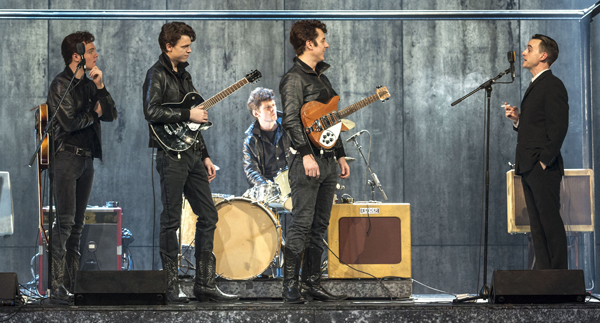
When the action starts, John convinces best pal Stuart to play bass with him and his mates for a few months in Hamburg, though Stuart has reservations because he loves painting and can’t play bass well (although it is Stuart who names the group with the cooler name “The Beatles”). John convinces bandmates Paul, George, and Pete that Sutcliffe’s cool will make up for his lack of musical ability. While playing yet another everyday six-hour set at a wretched, seedy, dive club, Stuart meets Astrid and falls madly in love with her; this changes the course of both Stuart and the Beatles forever, but will this benefit all parties involved? Unfortunately, the artistic development of John Lennon, Paul McCartney, George Harrison, and Pete Best – and the evolution of their relationships – are peripheral in this piece claiming to be a dramatized account of the birth of the Beatles.
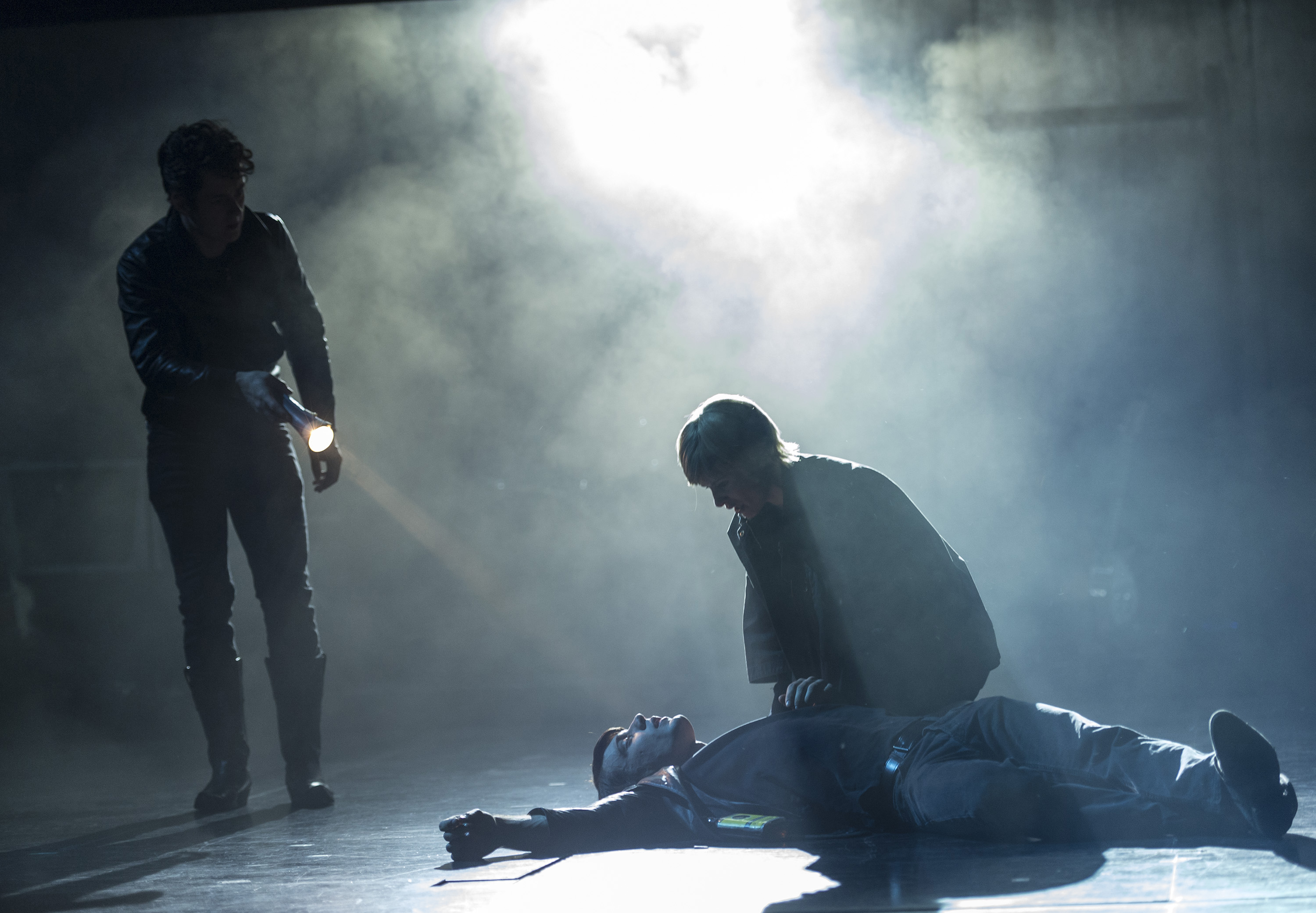
Nick Blood adequately plays the tortured artist and conflicted spirit that is Stuart Sutcliffe, but at times his performance is akin to a lesser performance from William Hurt on screen: Subdued to the point of being dull. Leanne Best nails the German accent of Astrid but misses the layers and nuance of her character that ought to have generated more sexual and dramatic tension. Andrew Knott’s accent and manner-of-speaking is indicative of the scene-stealing, cheeky youth, John Lennon, but he lacks nuance and does not embody the role; Knott’s comic delivery doesn’t extend as well as his accent and he draws out his lines too long. His big confrontation with Stuart and Astrid doesn’t pay off because his one-note performance – that of the joshing dick – consumes his portrayal. The best actor of the lot is James Wallace as George Martin; his work as the dignified, results-driven record producer is right in tune with his real-life counterpart; his brief scenes involving the corralling and recording of The Beatles are afforded the proper weight and elucidates the drama which is lacking in the rest of this jukebox musical.
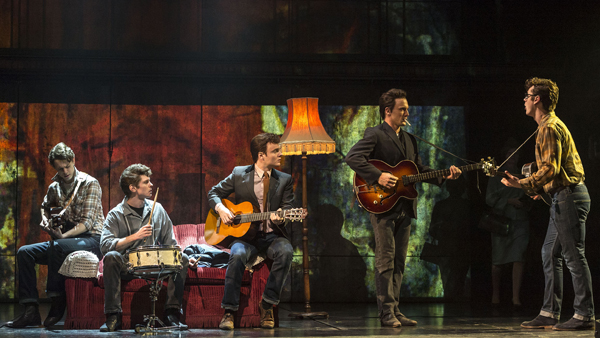
Daniel Healy (Paul), Daniel Westwick (George) and Oliver Bennett (Pete) sing and play their instruments well, but there’s not much for them to do; their roles take a backseat to Stuart and Astrid. It’s telling and ironic that the best moment of the entire show occurs when Paul is rehearsing a little original ditty called “Love Me Do”: John listens to it and proceeds to elevate the song with his input and insight. This palpable moment in which creativity clicks and passions coalesce is what the piece requires overall in order to be engaging, intriguing and exciting. Alas, this sort of illumination is put off to the side to showcase Stuart’s love affair.

The technical aspects of the show are more accomplished than the performances and construction. David Holmes’ dank and dark lighting design features a nearly grayscale scheme that best illuminates the vibe of the early ‘60s rock ‘n roll clubs in Europe. Since that “new” liberating rock ‘n roll sound was fast and cluttered, Richard Brooker’s sound design is rightfully jangly and abrasive – but also very, very loud, which may put some people off. Timothy Bird and Nina Dunn for Knifedge’s projection designs include the photos that Astrid took of the Beatles and Stuart, and are artfully displayed on both the shifting set pieces and the back wall. Set Designer Andrew D. Edwards’ bare bones set is appropriate, while also showcasing a few shifting tall columns and a slide-forward stage (for the band), that effectively propel the story forward even as the script does not.
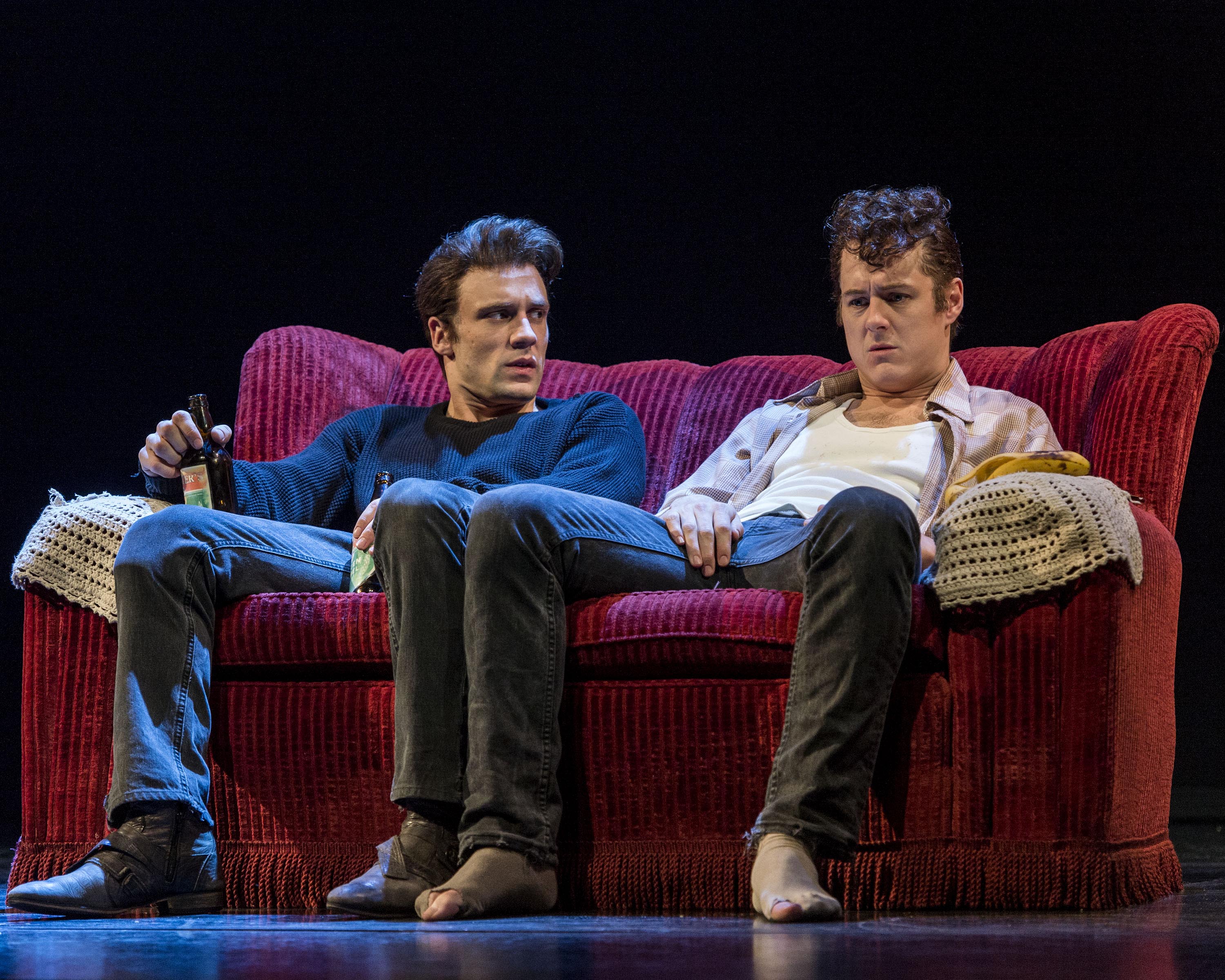
Backbeat suffers from identity crisis. Does it want to be the tale of Stuart Sutcliffe and operate as a parable about artistic and personal fulfillment being the catalyst for true success? Or, does it want to capture that moment in time when the Beatles weren’t worldwide icons, and artfully chart their rise as persons and artists with the triumphs, tragedies, and sacrifices made on the road to phenomenal success? These two stories on the same stage at the same time yield very weak results, and only one of them requires music. Backbeat, as presented by Karl Sydow in association with Glasgow Citizens Theatre, just doesn’t work. And, no, that jaunty twelve-minute sing-a-long to early Beatles’ hits after the bows won’t save the production, either. (Yes, now you know: nearly 100% of the actual Beatle’s songs you are promised are delivered after the show.) I wanted this show to please please me, but instead of making me twist and shout, it only put me in misery.
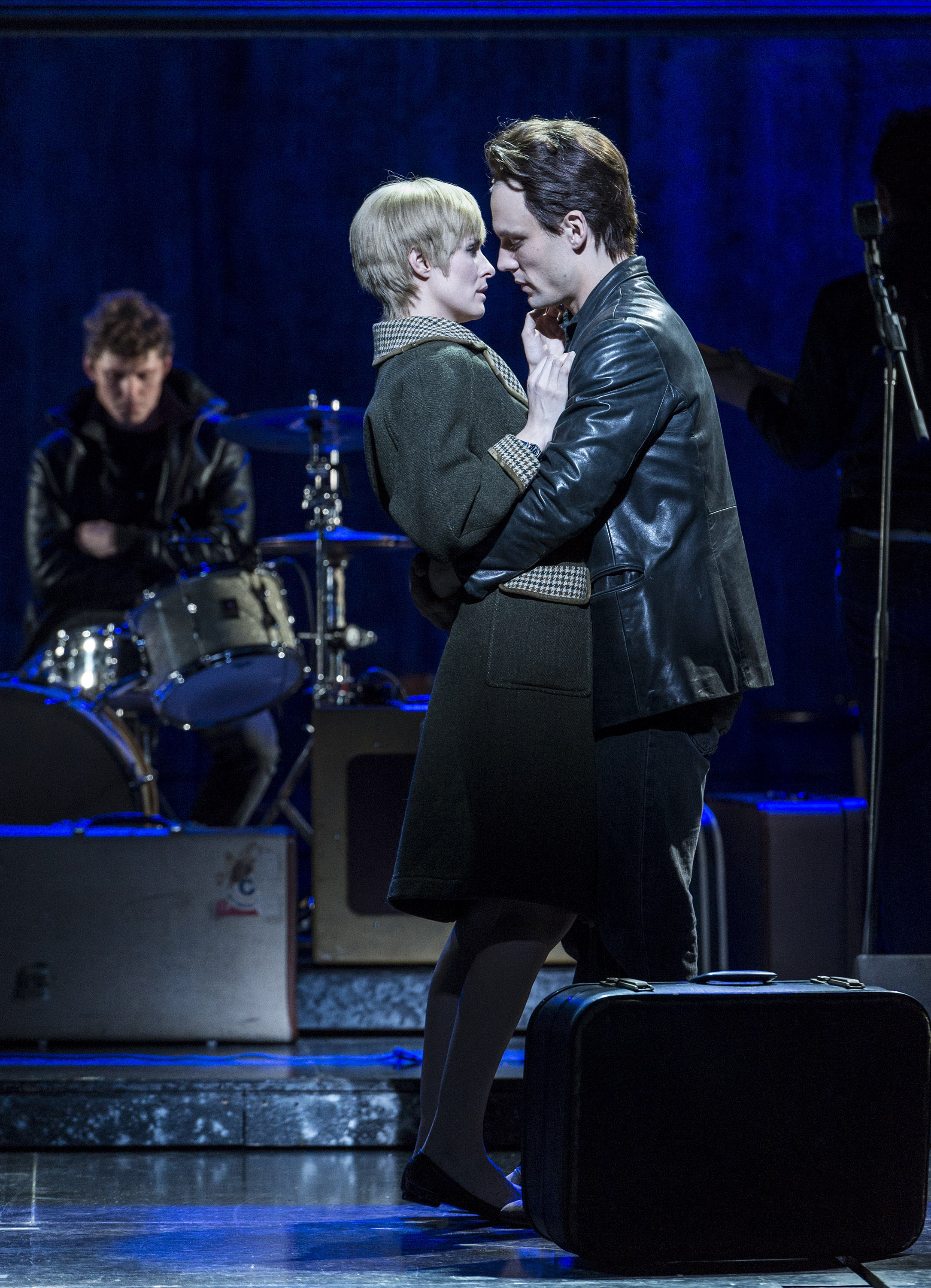
photos by Craig Schwartz
Backbeat
Center Theatre Group at the Ahmanson Theatre
scheduled to end on March 1, 2013
for tickets, call (213) 972-4400
or visit http://www.centertheatregroup.org
